490,000+ drivers found their agreements with us

If you acted as a guarantor on a car finance agreement between 6 April 2007 and 1 November 2024, you can be part of a mis-sold car finance compensation claim, and your position often gives you separate grounds to complain. The fastest first move is to use Make A PCP Claim’s free agreement finder, which locates car finance agreements in under 60 seconds, or check your Equifax, Experian or TransUnion credit file. Under the Financial Conduct Authority’s redress scheme, you also have the right to complain directly to the lender or escalate to the Financial Ombudsman Service.
TL;DR:
- Guarantors can claim compensation for mis-sold car finance agreements from 2007 to 2024, especially when undisclosed commissions or contractual ties influenced the deal.
- To start a claim, gather original documents, locate the agreement using free online tools, and complain directly to the lender before escalating to the Financial Ombudsman if needed.
- Most payouts average around 830 pounds but depend on personal payments made and the amount of undisclosed commissions involved in the case.
- Guarantors often carry significant financial risk and should treat their guarantee as a separate claim, especially if they made payments after the borrower defaulted.
- No upfront fees are required to claim, and the deadline for lodging a complaint is August 31, 2027, with early action speeding up potential redress.
Eligibility runs on dates, not on what the car looked like or how much you paid. The FCA’s motor finance redress scheme covers regulated hire purchase (HP), PCP and similar agreements taken out between 6 April 2007 and 1 November 2024. If the guarantee sits on an agreement outside that window, it falls outside this particular scheme, though other consumer protections may still apply.
Mis-selling under the scheme splits into three categories, set out in FCA policy statement PS26/3:
Ask yourself: did the dealer ever mention how their commission was calculated? Did anyone explain that a different lender might have offered a cheaper rate? If the answer to either is no, you likely have grounds to complain. Not every case qualifies. Standard fixed-commission deals with full disclosure sit outside the scheme, and that’s a genuine exclusion worth knowing before you invest time in a complaint.
Work through this in order, and keep a copy of everything you send.
Pro Tip: Keep a simple log with the date you sent each letter, who you spoke to, and what they said. If your case eventually needs Ombudsman involvement, that timeline does more to support your claim than any amount of angry retelling.
For a broader walkthrough of lender response times and the wider complaint process, see this guide on how to claim car finance compensation in the UK.
A guarantor doesn’t need to wait passively for the primary borrower to act. If the borrower has already complained, you can usually be added to that claim as an interested party, particularly where you made payments yourself after the borrower defaulted. Where the borrower hasn’t complained at all, you can raise your own complaint about the commission structure, since the guarantee agreement was part of the same mis-sold arrangement.
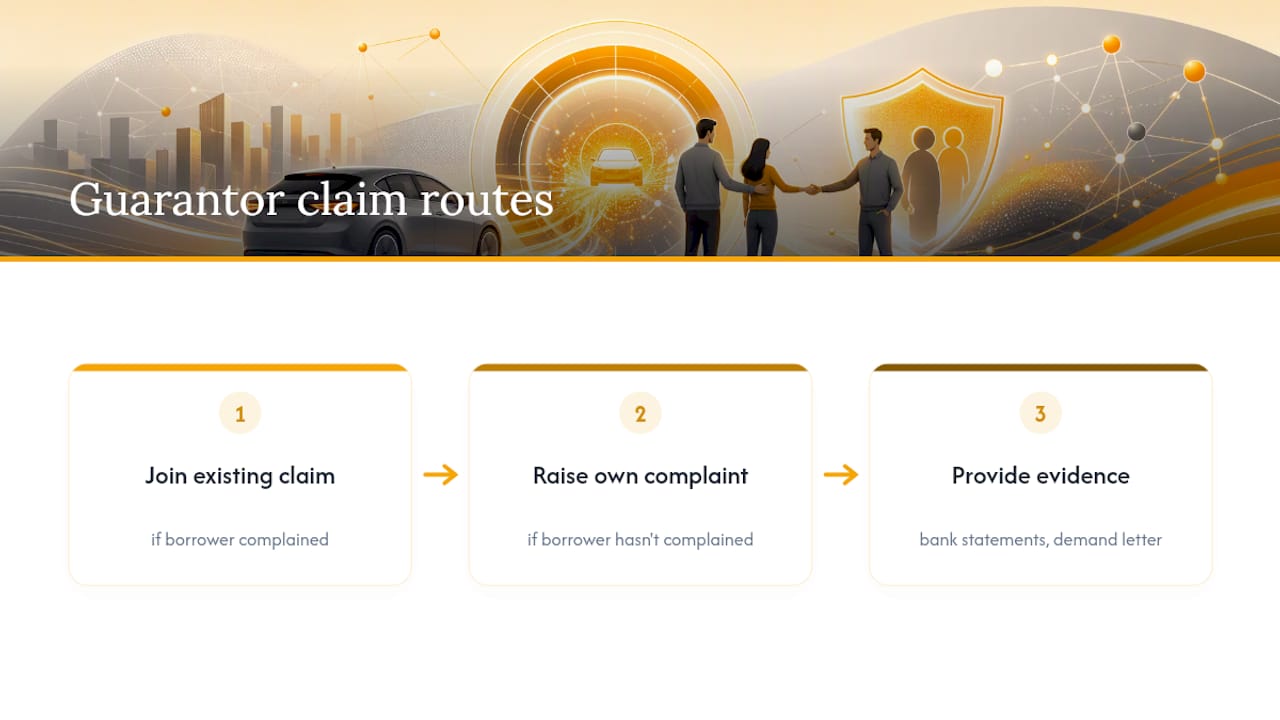
Redress typically reduces the outstanding balance first, then pays any surplus in cash. If you covered payments on the borrower’s behalf after a default, gather your bank statements and any written demand from the lender showing you paid under the guarantee. That evidence is what turns “I think I’m owed something” into a claim the lender can actually process.
Average payouts across the scheme sit around £830 per agreement, though guarantor cases can vary depending on how much you personally paid and when.
Watch for scams. Legitimate claims never require an upfront fee, and no genuine lender or claims firm needs your online banking password to verify your identity. If a caller asks for either, hang up.
Parts of the FCA scheme are currently paused pending legal proceedings, but that doesn’t stop you complaining to your lender now. Lodging a complaint early preserves your position in the queue and can speed up payment once the pause lifts.
Realistic expectations:
Most coverage of the car finance scandal talks about “borrowers” as if a guarantor is just a signature on a form. That’s a mistake. A guarantor often ends up carrying real financial exposure, sometimes making payments the primary borrower never keeps up, and the redress conversation rarely accounts for that properly. The FCA’s own framework doesn’t exclude guarantors, but it doesn’t spell out their route either, which leaves a lot of people assuming they have no standing at all.
What actually works is treating your guarantee as its own piece of evidence, not an afterthought to someone else’s complaint. Make A PCP Claim finds car finance agreements for free in under 60 seconds, which matters most for guarantors precisely because they’re less likely to have the original paperwork sitting in a drawer. Where a case is straightforward, a direct complaint to the lender is often enough. Where the lender disputes the facts or the sums involved are significant, referral to a solicitor tends to move things faster than going it alone.
— Jake
There’s no need to trawl through old paperwork or ring round dealerships to find out if you’re owed anything. The site offers a free finder that searches for matching car finance agreements in under 60 seconds, using a few basic details, without requiring registration numbers or lender documents.

Make A PCP Claim works on a referral basis: once your agreement is identified, eligible cases get referred to partner solicitors who handle the claim from complaint to resolution. You never pay Make A PCP Claim directly, and there’s no obligation once you run the check. If you’re a guarantor unsure whether you have standing to claim, or a borrower wanting the whole process handled without chasing lenders yourself, start your free check now and see what turns up.
Yes. A guarantor can complain directly about undisclosed commission or contractual ties, or be added to the primary borrower’s existing claim, particularly if you made payments after a default.
Gather the original finance agreement, the guarantee document, bank statements showing any payments you made, and correspondence with the lender or dealer. Make A PCP Claim’s free finder can help locate the agreement itself if you don’t have it.
If your lender hasn’t contacted you, the deadline to lodge a complaint yourself is 31 August 2027. Complaining sooner still helps, since parts of the scheme are paused pending legal proceedings.
No. Genuine complaints, and referrals through services like Make A PCP Claim, never require an upfront fee. Any caller asking for payment before they’ll help is a scam.
Average redress across the scheme is around £830 per agreement, though the hybrid remedy approach means individual amounts vary depending on the commission involved and how much you personally paid.