490,000+ drivers found their agreements with us

Reviewing car finance claim offers can feel overwhelming when you’re faced with multiple proposals, each promising different refund amounts and terms. Many UK car owners struggle to assess these varied offers effectively, unsure which details matter most or how to spot unfavourable conditions that could reduce their returns. This guide clarifies the essential steps to critically evaluate claim offers, helping you make informed decisions that maximise your potential refund. You’ll learn exactly what to check, common pitfalls to avoid, and how to verify you’re choosing the best option for your circumstances.
| Point | Details |
|---|---|
| Proper preparation | Gather the right documents and your baseline position to spot discrepancies quickly and evaluate offers against realistic expectations. |
| Eligibility criteria | Know in advance which refunds qualify based on contract terms and timing to avoid wasting time on unsuitable offers. |
| Written proposals | Request written proposals with full calculation details, terms and payment schedules to avoid misunderstandings and have verifiable evidence. |
| Source authenticity | Verify offers come from FCA authorised firms with clear contact information and independent reviews to avoid scams. |
| Structured comparison | Create a simple spreadsheet listing each offer alongside key metrics such as gross refund, fees, net amount and estimated completion time to compare value clearly. |
Successful offer evaluation starts with thorough preparation. You cannot accurately assess a claim proposal without understanding your original finance agreement and payment history. Your finance contract contains crucial details about interest rates, commission structures, and total amounts paid that form the foundation for calculating legitimate refund entitlements. Payment records verify the actual sums you’ve contributed, which directly impacts your potential return.
Knowing your eligibility criteria beforehand prevents wasting time on unsuitable offers. Different finance products carry varying refund qualifications based on when the agreement was signed, the lender involved, and specific contract terms. Research whether your agreement falls within eligible periods and meets the necessary conditions for PCP claims before proceeding. This knowledge helps you immediately dismiss offers that don’t align with your situation.
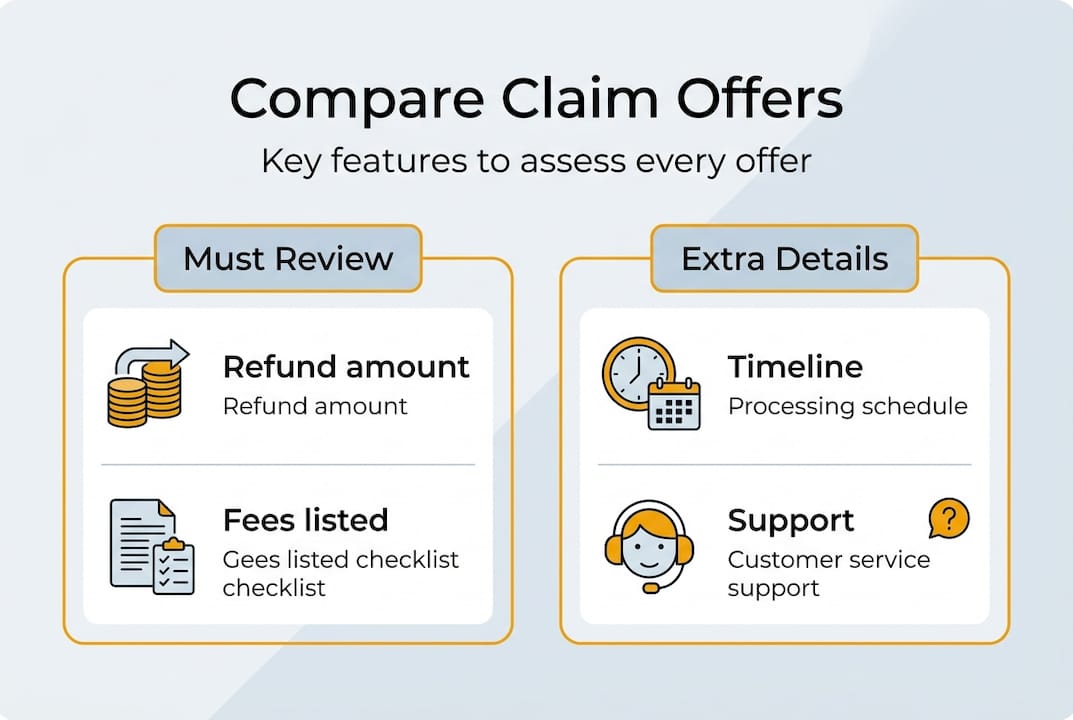
Create a detailed checklist of common claim offer features to streamline your comparison process. Your checklist should include refund amount, processing timeframes, fee structures, success rate guarantees, and communication protocols. Having this framework ready means you can systematically evaluate each offer against consistent criteria rather than making ad hoc judgements. This organised approach reveals patterns and highlights outliers that warrant closer scrutiny.
Gather all correspondence and offers in writing for accurate review. Verbal promises or phone discussions lack the permanence needed for proper verification. Request written proposals that detail every aspect of the offer, including calculation breakdowns, terms and conditions, and payment schedules. Written documentation protects you from misunderstandings and provides evidence if disputes arise later.
Pro tip: Create a simple spreadsheet listing each offer alongside key metrics like gross refund, fees, net amount, and estimated completion time. This visual comparison makes it immediately obvious which proposals deliver genuine value versus those with attractive headlines but poor actual returns.
With your documents organised and checklist prepared, you’re ready to systematically assess each claim offer. The following step-by-step process ensures you examine every critical element without overlooking details that could significantly impact your final refund.
Start by verifying the source and authenticity of each offer. Legitimate claims management companies should have clear regulatory credentials, transparent contact information, and verifiable track records. Check whether the firm is authorised by the Financial Conduct Authority and search for independent reviews from previous clients. Scam offers often use pressure tactics or request upfront payments, which reputable services never demand.
Compare the refund amounts offered against your estimated potential refund. Calculate your baseline expectation using your total interest paid and typical commission rates for your finance type. If an offer significantly exceeds realistic estimates, scrutinise the calculation method and success probability. Conversely, lowball offers might indicate the provider hasn’t thoroughly assessed your case or plans to retain excessive fees.
Assess any fees or conditions that reduce your net refund value. Most claims services charge contingency fees between 20% and 40% of successful recoveries, but some include additional administrative charges or hidden costs. Read the fee structure carefully, noting whether charges apply only on success or include upfront costs. Calculate your actual take-home amount after all deductions to determine true value.
Ensure the offer aligns with your eligibility and contract terms. Cross-reference the proposal details against your original finance agreement, checking that the provider has correctly identified your lender, contract dates, and finance product type. Mismatches here suggest inadequate case assessment and increase the likelihood of claim rejection or delays. Verify that the offer addresses all potentially eligible agreements if you’ve held multiple finance contracts.
Request clarifications on unclear offer components before acceptance. Don’t hesitate to ask detailed questions about calculation methods, success rates for cases similar to yours, or specific terms that seem ambiguous. Professional providers welcome inquiries and provide transparent answers. Evasive responses or reluctance to explain details clearly signal potential problems.
| Review step | What to check | Red flags |
|---|---|---|
| Source verification | FCA authorisation, reviews, contact details | Pressure tactics, upfront fees, vague credentials |
| Refund calculation | Amount vs. realistic estimate, methodology | Unrealistic promises, no breakdown provided |
| Fee assessment | Percentage, additional charges, payment terms | Hidden costs, unclear structure, excessive rates |
| Eligibility match | Contract alignment, lender identification | Mismatched details, generic proposals |
| Clarity test | Transparent explanations, detailed responses | Evasive answers, rushed decisions |
Pro tip: Request case studies or examples of similar claims the provider has successfully resolved. This gives you concrete evidence of their capability and helps you gauge whether their success rate claims are credible.
Following these systematic steps protects you from common evaluation errors. However, even careful reviewers sometimes fall into predictable traps that compromise their claim outcomes. Understanding these mistakes helps you avoid them entirely.
Ignoring small print terms can devastate your final refund amount. Many offers contain clauses that seem minor but significantly impact your return, such as deductions for administrative costs, penalties for early withdrawal, or obligations to pursue additional claims through the same provider. These buried conditions often reduce your net refund by hundreds or thousands of pounds. Read every term thoroughly, particularly sections covering fees, obligations, and circumstances that might alter the agreed refund.

Failing to check whether the offer covers all eligible finance agreements leaves money on the table. If you’ve had multiple car finance contracts over the years, each might qualify for separate refunds. Some providers focus only on the most obvious or recent agreement whilst overlooking others that could yield substantial returns. Verify that the offer assessment includes every potentially eligible contract you’ve held.
Accepting offers without getting full written details creates unnecessary risk. Verbal assurances or summary emails lack the legal weight of comprehensive written agreements. Insist on receiving complete terms and conditions documents that specify exactly what the provider will do, what you’ll receive, and under what circumstances. This documentation becomes essential if disputes arise or promised outcomes don’t materialise.
Delaying your review risks missing deadlines or valid claim periods. Car finance refund claims often have limitation periods, and some offers include expiry dates for their terms. Procrastination might mean losing the opportunity entirely or facing less favourable conditions later. Set aside dedicated time to review offers promptly whilst maintaining thoroughness.
“Many claimants lose substantial sums by overlooking fees or misunderstanding how refund calculations work, accepting attractive headline figures without examining the net amount they’ll actually receive.”
Recognising these pitfalls positions you to make genuinely informed decisions. With common mistakes avoided, you can confidently move towards verifying and finalising your optimal claim offer selection.
Use a structured comparison approach to weigh all critical factors simultaneously. Create a detailed table that lists each offer alongside refund amount, processing timeframes, fee percentages, net return after fees, provider reputation scores, and included support services. This comprehensive view prevents you from overweighting single factors like speed or headline refund amounts whilst neglecting others that significantly impact your overall experience and outcome.
| Provider | Gross refund | Fee % | Net refund | Timeline | Support level | Overall score |
|---|---|---|---|---|---|---|
| Provider A | £3,200 | 25% | £2,400 | 12 weeks | High | 8.5/10 |
| Provider B | £3,500 | 35% | £2,275 | 8 weeks | Medium | 7/10 |
| Provider C | £2,900 | 20% | £2,320 | 16 weeks | High | 8/10 |
Confirm all terms are documented and thoroughly understood before accepting. Request a final written agreement that consolidates every discussed element, including refund calculations, fee structures, service commitments, and your obligations. Review this document carefully, checking that it matches your understanding from previous communications. If discrepancies exist, address them immediately rather than assuming they’ll be resolved later.
Keep copies of all communications for comprehensive record keeping. Save emails, letters, recorded call summaries, and signed agreements in organised files, both digital and physical. This documentation protects your interests if questions arise about what was agreed, provides evidence for regulatory complaints if needed, and helps you track progress against promised timelines. Organised records also simplify future claims if you discover additional eligible agreements.
Follow up promptly after acceptance to monitor claim progress and payment. Establish clear communication channels and expected update frequencies with your chosen provider. Don’t wait passively for news; proactively request status updates at agreed intervals. This engagement demonstrates your active involvement and often encourages faster processing. Track actual progress against promised timelines, escalating concerns if delays occur without adequate explanation.
Pro tip: Before final acceptance, conduct one last verification check by contacting your original lender directly to confirm they’re aware of potential claims and understand their refund process. This independent confirmation helps you validate the provider’s approach and ensures alignment between all parties.
With your claim offer verified and finalised, you’ve positioned yourself for the best possible outcome. However, navigating this process alone can still feel daunting, particularly when dealing with complex calculations and lender negotiations. Professional support can streamline your journey significantly.
Navigating car finance refund claims requires expertise in regulatory frameworks, lender practices, and calculation methodologies that most car owners simply don’t possess. We simplify this complex process by handling every aspect of your claim from initial assessment through final payment. Our team understands exactly what lenders look for and how to present your case for maximum impact.
Our service helps verify offers to ensure you receive the best possible return. We conduct independent assessments of your finance agreements, calculating realistic refund expectations based on current precedents and regulatory guidance. This baseline empowers you to evaluate any offers you receive objectively, knowing whether they represent fair value or fall short of what you deserve.
Access expert guidance and support tailored specifically to your claim circumstances. Every case differs based on lender, contract terms, and individual payment history. We provide personalised advice that addresses your unique situation rather than generic guidance. Our specialists answer your questions, explain complex terms clearly, and advocate for your interests throughout the process. Start your claim journey easily through our dedicated car finance claim platform, designed to make submissions straightforward and transparent.
Verify the provider holds valid Financial Conduct Authority authorisation and check independent review platforms for client feedback. Legitimate firms provide transparent contact details, never request upfront payments, and willingly answer detailed questions about their processes. Be wary of pressure tactics or offers that seem unrealistically generous compared to your estimated entitlement.
Examine your original finance agreement, complete payment history, and any previous correspondence with your lender. Compare these against the offer’s refund calculation breakdown to verify accuracy. Request the provider’s full terms and conditions document, fee structure details, and written confirmation of their service commitments before proceeding.
Many providers offer some flexibility, particularly regarding fee percentages for straightforward cases or multiple claims. Approach negotiations professionally, presenting clear reasons why adjusted terms are justified. However, extremely low fees might indicate reduced service quality, so balance cost savings against the provider’s capability and reputation.
Contact the provider immediately with specific details about the discrepancies you’ve identified. Request written explanations and corrections before accepting any terms. If the provider cannot satisfactorily address your concerns or dismisses legitimate errors, consider this a warning sign and explore alternative providers who demonstrate greater attention to detail.
Timelines vary significantly based on lender responsiveness and case complexity, typically ranging from 8 to 20 weeks. Your provider should give you a realistic estimate based on their experience with your specific lender. Maintain regular contact throughout the process and don’t hesitate to escalate if progress stalls without explanation beyond the estimated timeframe.