490,000+ drivers found their agreements with us

TL;DR:
- A financial hardship claim is a formal request to a lender for payment relief due to changed financial circumstances. Lenders assess each case individually and may offer options like payment holidays, reduced payments, or restructuring plans. Acting early and providing clear financial information improves the chances of a successful hardship relief.
A financial hardship claim is a formal request made by a borrower to their car finance lender, asking for payment relief when changed circumstances make the original monthly payments unaffordable. Job loss, serious illness, or a sudden drop in household income are the most common triggers. The Financial Conduct Authority (FCA) and the Consumer Credit Act 1974 both shape how lenders must respond to these requests. No standard legal form exists for this process. Lenders handle hardship requests individually, assessing each case on its own merits. Makeapcpclaim helps UK borrowers understand their rights and find their car finance agreements for free in under 60 seconds.
A financial hardship claim covers a wider range of options than most borrowers realise. Lenders do not simply say yes or no to a single request. They assess your circumstances and may offer several forms of financial hardship assistance, each with different implications for your debt and credit record.
The main options lenders typically offer include:
| Option | Best suited to | Key consideration |
|---|---|---|
| Payment holiday | Short-term cash flow crisis | Interest may still accrue |
| Reduced payments | Moderate, ongoing difficulty | Shortfall added to balance |
| Restructured plan | Long-term affordability problem | Higher total interest cost |
| Voluntary termination | Enduring hardship, 50% paid | Vehicle must be in good condition |
| Early settlement | Lump sum available | May reduce total cost |
Pro Tip: Before contacting your lender, write out a simple monthly budget showing your income and essential outgoings. A clear financial picture makes your request far more credible. Lenders respond better to a specific proposal than to a vague appeal for help.

These are two entirely separate processes, and confusing them is one of the most common mistakes borrowers make. A hardship claim addresses your current inability to meet payments. The FCA motor finance redress scheme addresses historical mis-selling, specifically whether you were charged a higher interest rate because of a discretionary commission arrangement (DCA) between your lender and the car dealer.
The FCA redress scheme has faced significant legal challenges. As of 2026, parts of the scheme remain suspended, though the deadline for complaints is 31 august 2027. Average compensation has been estimated at around £829 per eligible agreement, though actual payouts remain delayed while legal proceedings continue.
The FCA advises all consumers to submit their motor finance complaints directly to their lender, free of charge, without using a claims management company or solicitor. Some claims firms charge more than 30% of any compensation received, and the FCA has warned that using multiple firms can trigger several termination fees simultaneously. You keep more of your money by complaining directly to the lender yourself.
Key distinctions between the two processes:
Understanding how car finance compensation works separately from hardship relief helps you avoid wasting time on the wrong process.
Filing a hardship claim is straightforward, but the timing and quality of your communication matter enormously. Early, honest contact with your lender is the single most important factor in reaching a workable outcome. Lenders prefer negotiation over repossession, which is costly and legally complex for them.
Pro Tip: If negotiations stall or the lender’s offer feels unworkable, contact Citizens Advice, StepChange, or National Debtline before accepting unfavourable terms. All three services are free, impartial, and experienced in car finance disputes.
Lenders must follow specific legal procedures before repossessing a vehicle, including formal notification and, in many cases, a court order. This gives you time to negotiate, but only if you engage early.
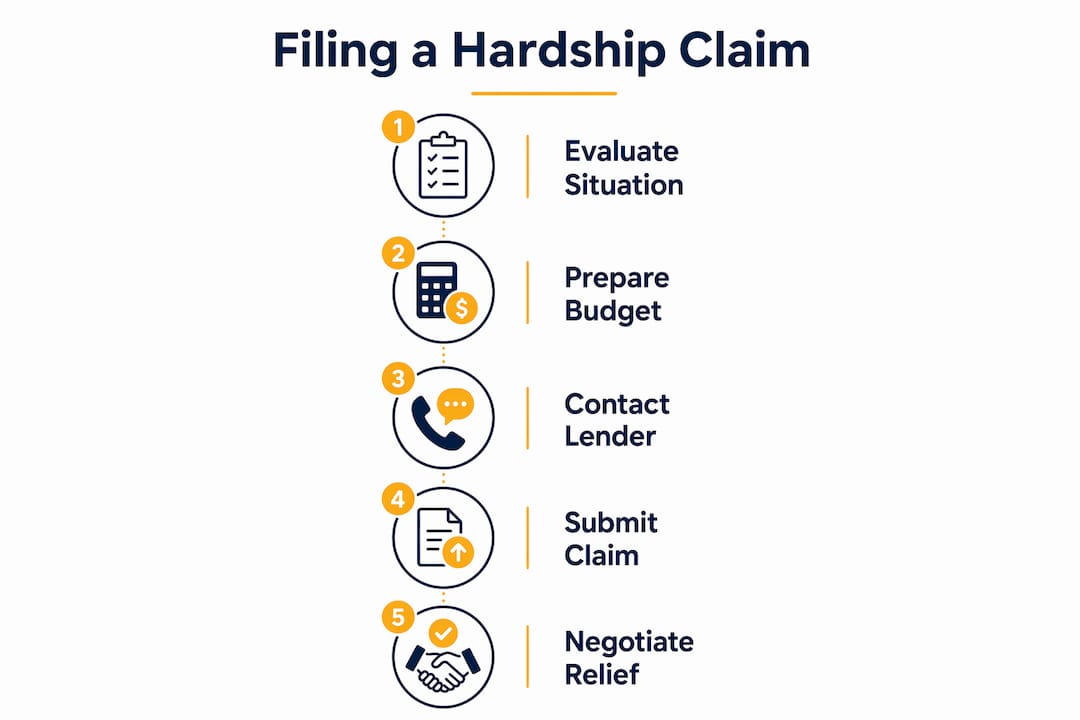
A hardship claim resolves many short-term difficulties, but some borrowers face deeper financial problems that a payment holiday cannot fix. Free professional advice services exist precisely for this situation.
Free debt advice agencies such as Citizens Advice, StepChange, and National Debtline can also help you understand how a formal insolvency option would affect your car finance agreement specifically. For borrowers exploring dispute options when lender negotiations fail entirely, independent legal guidance can clarify what formal routes remain open.
A financial hardship claim is a direct request to your lender for payment relief, and acting early gives you the strongest chance of a workable outcome.
| Point | Details |
|---|---|
| Definition of hardship claim | A formal request to your lender for payment relief due to changed financial circumstances. |
| No standard form exists | Lenders handle hardship requests individually under internal codes of practice, not a fixed legal process. |
| Hardship vs. redress | Hardship claims address current payment difficulty; FCA redress claims address historical mis-selling. |
| Act before missing payments | Contacting your lender proactively produces better outcomes than defaulting without communication. |
| Free advice is available | Citizens Advice, StepChange, and National Debtline provide free support when lender negotiations stall. |
The biggest mistake I see borrowers make is waiting. They miss one payment, then another, and by the time they contact the lender, the relationship has already deteriorated. Lenders are not looking to repossess your car. Repossession is expensive, legally complicated, and bad for their balance sheet. They would genuinely rather work something out with you.
What I have also noticed is that borrowers often underestimate the power of a clear, written budget. Vague requests for “some help” rarely move lenders. A one-page summary showing your income, your essential outgoings, and what you can realistically afford each month is far more persuasive. It shows you are serious and that you have thought it through.
On the FCA redress scheme, I would urge caution about expectations. Legal uncertainties mean complaints should be filed promptly, but compensation is not guaranteed and timelines remain unclear. Do not pay a claims management firm to do something you can do yourself for free. The FCA has been explicit on this point.
Use the free resources available to you. Citizens Advice, StepChange, and National Debtline exist for exactly this situation. They are staffed by people who handle car finance disputes every day.
— Jake
Makeapcpclaim gives UK borrowers a fast, free way to understand their car finance position before approaching a lender.

The Makeapcpclaim tool finds your car finance agreements in under 60 seconds, at no cost to you. Knowing exactly what agreements you hold, and on what terms, puts you in a much stronger position when requesting hardship relief or submitting a mis-selling complaint. You can also use the service to understand whether you may be eligible for compensation under the FCA motor finance redress scheme. Visit Makeapcpclaim to check your agreements now and get clear on your options before your next payment is due.
A financial hardship claim is a request made to your car finance lender for payment relief when changed circumstances, such as job loss or illness, make your original payments unaffordable. Lenders assess these requests individually and may offer payment holidays, reduced payments, or restructured plans.
No. Hardship claims are submitted directly to your lender’s customer or hardship team, free of charge, without any legal representation required. If negotiations stall, free advice from Citizens Advice or StepChange is the recommended next step.
A hardship claim addresses your current inability to pay. An FCA redress complaint addresses historical mis-selling through discretionary commission arrangements and seeks monetary compensation. Both can be pursued at the same time if relevant.
Under the Consumer Credit Act 1974, you can voluntarily terminate most car finance agreements once you have paid at least 50% of the total amount payable, returning the vehicle without further liability, provided it is in satisfactory condition.
If your lender refuses a reasonable hardship request, you can escalate the complaint to the Financial Ombudsman Service. Free debt advice agencies such as StepChange and National Debtline can also help you explore formal options including Debt Management Plans, IVAs, or Debt Relief Orders.