490,000+ drivers found their agreements with us

TL;DR:
- The final payment in a PCP agreement is a fixed lump sum, known as the GMFV, due at the contract’s end for ownership transfer. It includes the balloon payment, potential OTP fee, and any outstanding charges, with additional costs arising from excess mileage or vehicle damage. Understanding this amount and your options—paying, returning, or part-exchanging—helps avoid unexpected costs and makes better financial decisions.
If you’ve reached the end of a PCP agreement and found yourself confused about what “final payment” actually means, you’re not alone. Thousands of UK car owners discover at contract end that the term carries more weight than they expected. Understanding the final payment definition from the outset is the difference between walking away with your car, handing it back without penalty, or being hit with unexpected charges that could have been avoided entirely with a little preparation.
| Point | Details |
|---|---|
| Final payment meaning | The final payment in PCP finance is a fixed lump sum you pay to own the car outright. |
| Fixed balloon payment | The balloon payment amount is agreed upfront and does not change during your contract. |
| Condition and mileage matter | Additional charges may apply if you exceed mileage limits or damage the car on return. |
| End-of-term options | You can keep the car by paying the final payment, hand it back, or part-exchange using equity. |
| Plan early | Knowing your final payment and conditions early prevents surprises and aids budgeting. |
PCP stands for Personal Contract Purchase, and it’s the most popular way to finance a car in the UK. Unlike a straightforward loan, PCP splits the cost of your vehicle into three parts: a deposit, monthly instalments, and then a lump sum at the end. That lump sum is the final payment, also known as the balloon payment or optional final payment (OFP).
What does final payment mean in practical terms? It means you’ve been paying down only a portion of the car’s value each month. The rest sits waiting at the end of the contract. When you reach that point, you have a choice to make.
Your three options are:
As Compare the Market explains, if you pay the PCP optional final payment, you own the car outright; if not, you can hand the car back or use equity to move into another agreement. That single decision point is where most of the financial risk and reward in PCP finance sits.
It’s worth reading up on PCP claim terminology if you’re also uncertain about the broader language in your agreement. Misunderstanding one term can cascade into misreading the whole deal.
One of the most reassuring aspects of PCP finance is that the balloon payment is fixed upfront, so you know the final cost before you sign. This fixed figure is technically called the Guaranteed Minimum Future Value (GMFV). It represents what the lender predicts the car will be worth at the end of your agreement, and it doesn’t change regardless of what happens to used car prices in the meantime.
That said, the GMFV is not always the only figure you need to pay. There are a few additional costs to be aware of:
The OTP fee is often a modest charge, sometimes as low as £10, but it can be higher depending on the lender. The key point is that it’s separate from the balloon. If you’re budgeting to own the car, factor both in.
If you choose not to pay and instead hand the car back, you sidestep the balloon entirely. But that leads us to the next layer of costs entirely.
Pro tip: Pull out your original PCP agreement right now and look for the phrase “optional final payment” or “GMFV.” That number, combined with any stated OTP fee, is your total cost to own the vehicle. Write it down.
Understanding how car finance compensation claims can arise from unclear or mis-sold terms is useful context here. Knowing your agreement inside out protects you.
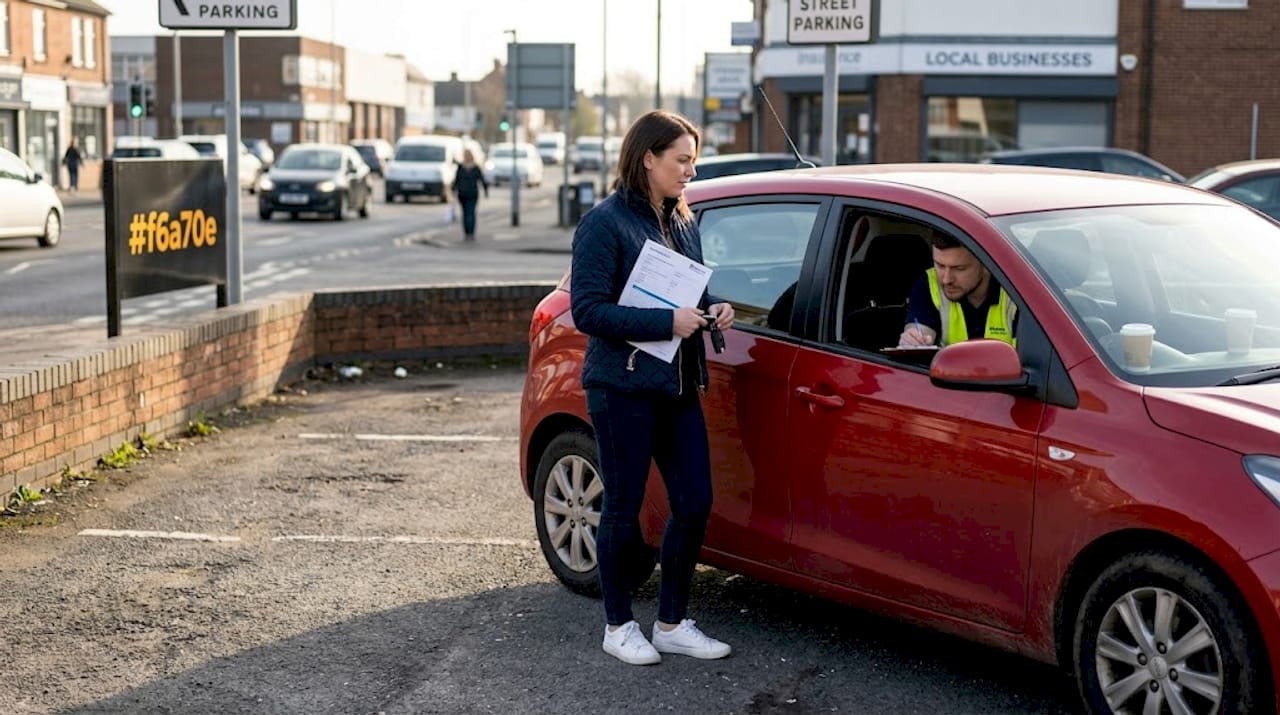
The final payment process doesn’t exist in isolation. Whether you choose to keep the car or hand it back, the condition of the vehicle and the mileage you’ve covered will affect your financial outcome significantly.
Here’s how the end-of-term conditions typically work:
As Compare the Market confirms, handing the car back depends on meeting agreed mileage and condition requirements, and exceeding these can lead to extra charges.
Pro tip: The British Vehicle Rental and Leasing Association (BVLRA) publishes a free fair wear and tear guide that sets the industry standard for acceptable damage. Download it, compare your car against it six months before contract end, and deal with any issues on your own terms rather than the lender’s.
If you believe charges at hand-back were unfair or that your original agreement was mis-sold, exploring making a PCP claim may be worth your time.
At the end of your PCP contract, you can pay the balloon payment to keep the car, hand it back, or part-exchange using equity into a new PCP deal. Each path has genuinely different financial implications.
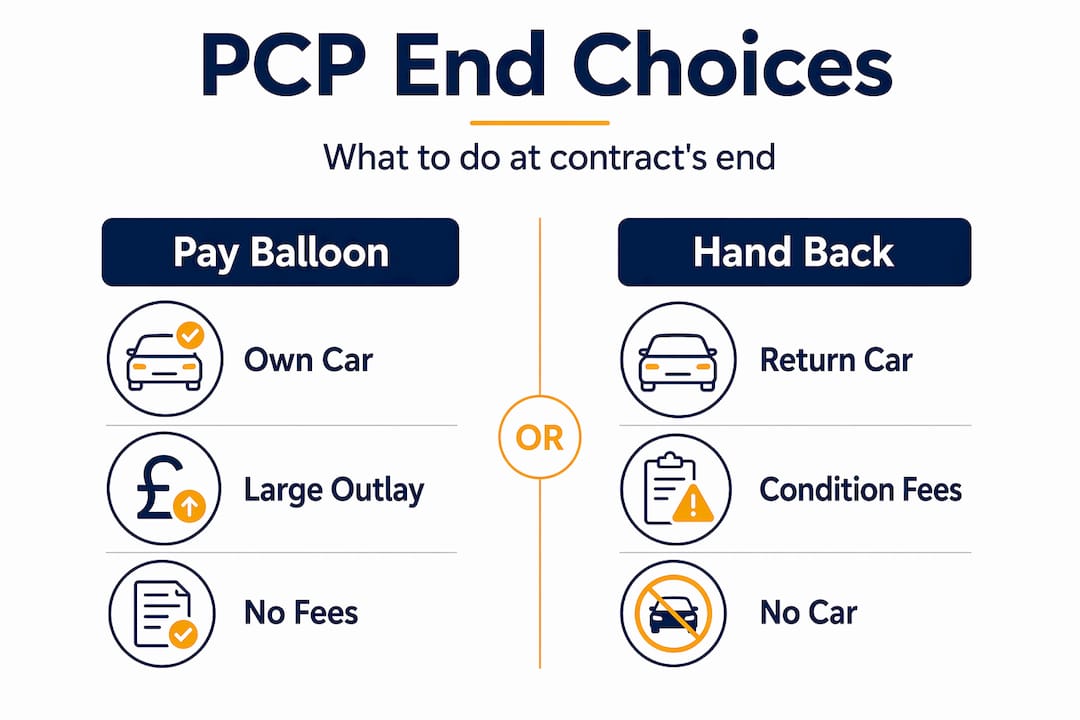
| Option | What happens | Financial risk | Best suited to |
|---|---|---|---|
| Pay the balloon | You own the car outright | High upfront cost if unplanned | Those who love the car and plan to keep it |
| Hand the car back | Car returned, contract ends | Condition and mileage charges may apply | Those who don’t need the car or have no equity |
| Part-exchange into new PCP | Equity used as deposit on next car | Low equity means higher new payments | Those wanting to upgrade and stay in PCP cycle |
The comparison highlights something often overlooked: the smartest option isn’t always the one that feels most familiar. Many drivers automatically start a new PCP deal without checking whether they have positive equity, effectively giving away money that could reduce their next set of monthly payments.
Key considerations when choosing:
Look into PCP finance options more broadly if you’re weighing up your decision. The right choice depends heavily on your individual circumstances.
Understanding final payments in theory is one thing. Actually preparing for one is another. Here’s how to approach it practically.
As Compare the Market notes, budgeting for the end of PCP should include the risk of condition or mileage penalties increasing overall costs, despite a fixed final payment. That fixed balloon figure is not the same as a fixed total cost.
Pro tip: If you’re planning to pay the balloon, set up a dedicated savings pot twelve months before the final payment due date. Even modest monthly contributions reduce the lump sum burden significantly or lower any top-up finance you might need.
If you’ve discovered that your original PCP was not sold transparently, look into claiming PCP compensation as a separate avenue.
Here’s where most articles stop: they give you the facts, list the options, and send you on your way. But the real value of understanding your final payment goes beyond spreadsheets.
Car finance is one of the largest recurring financial commitments most people in the UK make, and yet it’s treated with far less scrutiny than a mortgage. People will spend weeks researching a holiday and sign a PCP agreement in a showroom in forty minutes. The imbalance is staggering.
When you genuinely understand what your final payment means, including the GMFV, the OTP fee, the mileage implications, and your equity position, something shifts. You negotiate differently. You’re not just asking “what are my monthly payments?” You’re asking “what is the car worth at the end, and what are my real exit costs?” That question alone changes the dynamic entirely.
There’s also an emotional component that’s rarely discussed. The dread many drivers feel as the end of their PCP approaches comes almost entirely from uncertainty. They don’t know what they owe. They don’t know if the car meets condition standards. They don’t know if they’ll face a bill. That anxiety is the direct cost of not understanding the terms when they signed. It doesn’t have to be that way.
The deeper point is this: car finance is not complicated, but it is deliberately presented in a way that obscures the total cost. Dealers benefit from complexity. Lenders benefit from confusion. You benefit from car finance insight that puts the full picture in front of you. Knowing your final payment inside out is the most practical form of consumer protection available to you.
Knowing your final payment figure shouldn’t require digging through paperwork or waiting on hold with your lender. At Make a PCP Claim, we’ve made it straightforward.
Our free PCP agreement check locates your car finance agreement in under 60 seconds, giving you a clear view of your final payment obligations before they catch you off guard. Whether you’re planning to pay the balloon, hand the car back, or move into a new deal, knowing your exact figures early gives you options. We also assess whether your original finance agreement may have included undisclosed commissions or unfair terms, which could mean you’re owed compensation. Take the guesswork out of your PCP end date entirely.
The final payment, also called the balloon or optional final payment, is the fixed lump sum payable at the end of your PCP contract to take full ownership of the car. As Compare the Market confirms, the balloon payment is a lump sum set at the start of the contract that you pay to buy the car outright.
The balloon payment is fixed when you sign and will not increase during the term. However, as Carsa explains, additional fees like the option-to-purchase fee may apply on top, and mileage penalties can increase your total end-of-contract cost.
Both will result in additional charges assessed at the point of hand-back. Extra charges apply if you exceed your agreed mileage or return the car with damage beyond fair wear and tear standards, effectively raising your overall final costs.
You can hand the car back with no further payments, provided you’ve met the mileage and condition requirements. Alternatively, if the car holds positive equity, you can use it as a deposit towards a new PCP agreement on your next vehicle.