490,000+ drivers found their agreements with us

Manufacturer finance deals — also called captive finance — are not neutral payment tools. They are built to sell cars faster and at higher specifications, which is why the Financial Conduct Authority and the Financial Ombudsman Service have both scrutinised them heavily in the context of mis-sold agreements. If you took out a PCP or HP agreement through a dealership since 2007, the structure of that deal may have worked against you without you realising it.
Three rapid red flags to check right now:
Pro Tip: Makeapcpclaim’s free service locates your car finance agreements in under 60 seconds — no registration number or paperwork needed. If any of the red flags above sound familiar, this is your starting point.
Captive finance is when a manufacturer sets up its own financial arm to lend directly to buyers, rather than leaving them to arrange a bank loan independently. Ford Credit, Volkswagen Financial Services, and BMW Financial Services are textbook examples. The goal is not purely profit from interest — it is control over the sale, the residual value, and the customer’s next purchase.
PCP (Personal Contract Purchase) is the dominant product. You pay a deposit, make monthly payments for two to four years, and then face a choice: hand the car back, pay a lump sum (the Guaranteed Future Value, or GFV) to own it outright, or part-exchange into a new deal. The GFV is set by the manufacturer’s finance arm, and captive-backed models show lower price depreciation than externally financed equivalents — because the manufacturer has a direct incentive to keep used-car values high.
HP (Hire Purchase) is simpler: you pay in instalments and own the car at the end. There is no GFV, no balloon payment, and no end-of-term decision. Mis-selling on HP agreements tends to centre on undisclosed commissions rather than residual value manipulation.
How captive finance differs from a standard personal loan:
The design of captive finance creates a structural tension: the manufacturer’s finance arm wants to close the deal quickly and at the highest possible specification, while the Consumer Credit Act 1974 and FCA rules require that credit is sold fairly and transparently.

Captive finance aligns terms with manufacturer lifecycle and upgrade behaviour, not with what is cheapest or most flexible for the buyer. That misalignment becomes mis-selling when specific things go wrong at the point of sale.
The most common mechanisms:
A buyer told “this is the only finance option available on this car” or shown a single-page offer with no APR breakdown has almost certainly experienced a textbook mis-selling scenario.
Evidence checklist — look for these in your paperwork:
What documents to collect first: your original finance agreement, any pre-contract information sheet, dealer emails or texts, and any notes you made at the time. If you cannot locate these, that is exactly what Makeapcpclaim’s free 60-second search is designed to solve.
Pro Tip: Even if you no longer have the car, you can still claim. Finance agreements since 2007 are covered, and Makeapcpclaim can locate the agreement without a registration number.
Three pillars govern mis-sold car finance in the UK.
The Financial Conduct Authority regulates lenders and credit brokers (including dealers acting as brokers). Its rules on fair treatment of customers and disclosure of commissions are the primary basis for most PCP and HP mis-selling claims.
The Consumer Credit Act 1974 gives borrowers specific rights, including the right to a copy of their agreement and protections against unfair relationships between lender and borrower. Section 140A of the Act is particularly relevant where a commission arrangement created an unfair relationship.
The Financial Ombudsman Service adjudicates disputes between consumers and regulated firms when an internal complaint has not been resolved satisfactorily.
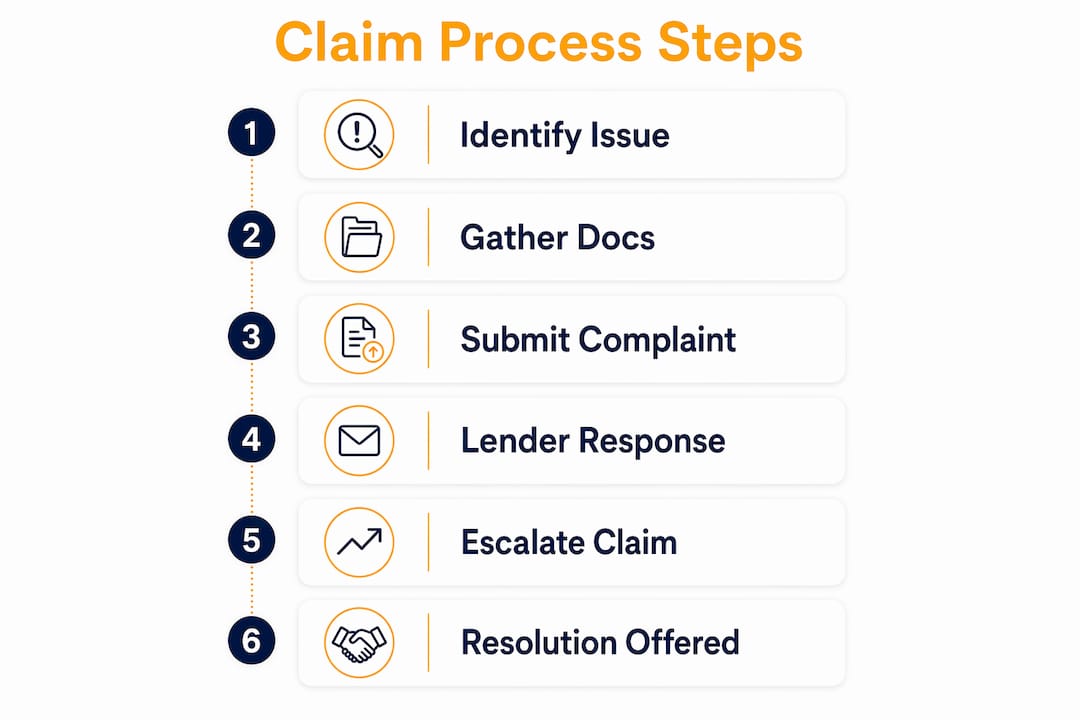
The practical complaint route:
Typical timescales include lender acknowledgement within a few business days, lender final responses within a couple of months, and Ombudsman investigations lasting several months after referral.
Follow these steps in order:
| Stage | Expected duration | Common delay cause |
|---|---|---|
| Lender acknowledgement | Within a few business days | Incorrect contact details |
| Lender final response | Within a couple of months | High complaint volumes |
| Ombudsman investigation | Several months | Case complexity |
| Settlement or award | Varies | Lender appeal |
On costs: complaining directly to the lender or Ombudsman is free. A claims management company or solicitor typically charges a success fee from any compensation awarded. Makeapcpclaim’s initial agreement search costs nothing.
For a detailed walkthrough of the complaints process, the guide on how to claim car finance compensation covers each stage in full.
Successful claims typically result in one or more of the following:
Settlement figures depend on the size of the original loan, the interest rate applied, the commission uplift percentage, and how long the agreement ran. Early evidence collection and an accurate timeline increase the chances of settlement, particularly where documentation shows a failure to disclose commission.
A note on credit reports: a successful claim does not automatically remove the finance agreement from your credit file, though lenders may update records as part of a settlement. Tax implications are uncommon for straightforward interest refunds, but worth confirming with a tax adviser if the sum is significant.
This article is general information, not legal or financial advice. Confirm the current rules with the Financial Ombudsman Service or a qualified solicitor for your specific situation.
A claims management company or partner law firm handles the parts most people find time-consuming: locating the original agreement, identifying whether discretionary commissions were applied, drafting the formal complaint, negotiating with the lender, and escalating to the Ombudsman or court if needed.
When it makes sense to use one: if you have multiple agreements, cannot locate paperwork, or simply do not want to manage correspondence with a lender over several months. A DIY complaint to the lender is perfectly viable for a straightforward single-agreement case where you have all the documents.
Questions to ask before you agree to representation:
Makeapcpclaim’s free 60-second agreement lookup costs nothing and requires no paperwork from you. If the search identifies a potentially mis-sold agreement, the case is referred to a partner law firm that handles the claim on a hands-off basis. You can also consider speaking to an independent broker for context on how transparent finance arrangements should look compared with what you were offered.
Manufacturer finance is a sales tool first, and that design is the root cause of most UK mis-selling claims — acting quickly to locate your agreement and gather evidence is the single most effective step you can take.
| Point | Details |
|---|---|
| Captive finance is a sales tool | Manufacturers use it to manage residuals and speed up sales, which can obscure the true cost of credit. |
| Discretionary commissions drive most claims | Dealers could vary your interest rate to earn more commission — without telling you. |
| The Consumer Credit Act 1974 and FCA rules protect you | Section 140A of the Act and FCA conduct rules are the primary legal basis for claims. |
| Evidence collection is the critical first step | Gather your original contract, pre-contract sheet, and dealer communications before anything else. |
| Makeapcpclaim finds your agreements free | The free 60-second search locates finance agreements since 2007 with no registration number needed. |
The scale of UK car finance mis-selling is genuinely significant. Millions of PCP and HP agreements were sold under commission structures that the FCA later found to be unfair, and many buyers still do not know their agreement may qualify for compensation. The monthly payment framing that made these deals feel affordable was, in many cases, deliberately designed to stop buyers asking about the total cost or the dealer’s incentive.
Makeapcpclaim exists to remove the friction from that first step. The free 60-second agreement search means you do not need to dig through old paperwork or remember which lender you used. Once an agreement is located, partner law firms handle the claim from start to finish.
Most people who were mis-sold car finance have no idea the agreement even qualifies for a claim. Makeapcpclaim’s free search finds every car finance agreement you have held since 2007 in under 60 seconds, with no registration number and no paperwork required.
Once your agreements are located, the case is passed to a partner law firm that manages the entire process on your behalf. You do not pay Makeapcpclaim directly. The partner law firm charges a success fee only if your claim succeeds. There is no obligation after the free check, and no paperwork to gather before you start.
Run your free 60-second agreement check now and find out whether your finance deal qualifies.