490,000+ drivers found their agreements with us

TL;DR:
- Missing or incomplete documents are the primary reasons car finance claims stall or are rejected.
- Organising and requesting key documents like the finance agreement, proof of identity, and bank statements ensure a smoother process.
Filing a car finance claim sounds straightforward until you realise you cannot find half the paperwork you need. Missing or incomplete documents are the single most common reason claims stall or get rejected outright. Having a solid document checklist for finance claims before you start makes the difference between a smooth process and months of back-and-forth. This guide gives you exactly that: a practical, itemised list of every document you need, plus guidance on what to do if you cannot find the originals. Makeapcpclaim even finds your car finance agreement for free in under 60 seconds.
| Point | Details |
|---|---|
| Start with your finance agreement | The original PCP or HP contract is the foundation of any car finance claim. |
| Missing documents are not a barrier | Lenders are legally obliged to provide replacement documents if originals are lost. |
| Prove the impact, not just the facts | Documenting stress and financial hardship alongside monetary loss strengthens your case. |
| Organise everything chronologically | A clear timeline helps the Financial Ombudsman assess your claim faster. |
| Avoid costly middlemen | Most claimants can succeed using free tools and FCA-compliant templates without paying large fees. |
Before you start gathering paperwork, it helps to understand the framework that determines what you actually need. Three things shape the required documents for claims: legal obligations on lenders, the Financial Conduct Authority’s expectations, and the Financial Ombudsman Service’s assessment criteria.
Lenders are legally required to retain customer records for a minimum of six years, which means replacement documents can be requested even if you no longer have your originals. That alone removes a huge barrier for many claimants who assume a lost agreement means a dead claim.
The FCA expects complaints to be evidenced clearly and fairly. The Financial Ombudsman Service goes further, looking for a structured complaint with a coherent narrative backed by supporting documents. Documentation quality is critical to whether the Ombudsman accepts and upholds a claim. Vague complaints without evidence rarely succeed.
The documents that matter most fall into four categories:
Pro Tip: When requesting documents from your lender, always do so in writing. A written request creates a paper trail and puts the lender under FCA-compliant obligation to respond promptly.
Here is the core financial claims documents list, with a description of each item’s role and what to do if you do not have it.
This is the single most important document. It should include the total amount financed, the annual percentage rate, the monthly repayment schedule, and any commission or broker fee details. If you cannot locate your copy, contact your lender directly and request a replacement in writing. Lenders must provide replacements within their six-year retention window.

A copy of your passport or driving licence as it stood when you signed the agreement. If your name or address has changed since, include documentation of that change too.
A utility bill, council tax statement, or bank letter dated around the time you took out the finance. This confirms your identity and helps the lender or Ombudsman match records.
Pull at least 12 months of statements covering the period when repayments were being made. Highlight the relevant transactions clearly. If repayments caused you to go into overdraft or miss other bills, those entries are evidence of affordability issues. Lenders failing affordability checks can significantly strengthen a mis-selling claim.
Any written communication relating to the finance agreement is valuable. This includes the original sales pitch emails, quotes, responses to earlier complaints, and any mention of commission or finance products. Even informal emails can reveal what you were told at the point of sale.
These documents support claims that you were given misleading information or that certain terms were not disclosed. An order form showing the finance product selected without a clear explanation of commission is particularly useful.
If you have already raised a complaint with the lender, keep every piece of communication related to it. Lenders must respond within eight weeks. After that, or if rejected, escalate to the Financial Ombudsman within six months.
This is where many claimants fall short. Beyond the finance agreement itself, you need to show the effect the mis-selling had on your finances. This can include evidence of additional borrowing to cover repayments, overdraft charges, or correspondence with debt advisers.
The Financial Ombudsman considers stress and inconvenience alongside financial loss. Demonstrating this impact through a written personal statement, medical records, or communications with a support service can result in higher compensation.
Pro Tip: Organise your documents into two folders: one for the finance agreement and identity records, one for evidence of impact and correspondence. Label each document with a short description and the date. This structure mirrors how the Financial Ombudsman reviews cases.
Losing paperwork does not mean losing your claim. You do not need the original documents to make a successful finance claim submission. Here is how to reconstruct your evidence:
| Document type | Ease of sourcing | Impact on claim | Common pitfall |
|---|---|---|---|
| Finance agreement (PCP/HP) | Medium (request from lender if lost) | Very high | Missing interest rate or commission detail |
| Proof of identity | Easy (current passport or licence) | High | Using current address rather than address at agreement time |
| Bank statements | Easy (online banking or formal request) | High | Not highlighting relevant transactions |
| Dealer/lender correspondence | Medium (request via data access) | High | Deleting old emails before checking relevance |
| Sales brochures or quotes | Difficult (dealer may not retain) | Medium | Useful if commission or terms were misrepresented |
| Evidence of financial impact | Medium (bank records and overdraft history) | Very high | Only showing monetary loss, not wider hardship |
| Personal impact statement | Easy (written by you) | High | Being vague; specifics carry much more weight |
Having the right documents is only half the job. How you submit them matters just as much. The following practices will help your claim move quickly through assessment.
Pro Tip: When you post documents, use tracked delivery and photograph every page before sending. If originals are ever disputed or lost in transit, you have an undeniable record.
I have seen hundreds of car finance claims, and the pattern is almost always the same. People focus on whether they have the finance agreement and stop there. They forget that proving repayments strained their finances is just as important as proving the agreement existed.
The other thing I see constantly: claimants treat a lost document as the end of the road. It is not. In my experience, a well-written letter to the lender requesting replacement documents, combined with six months of bank statements, is often sufficient to build a credible case from scratch. The legal obligation on lenders to retain records for six years is genuinely useful leverage.
What actually slows cases down is disorganised evidence. An Ombudsman investigator reviewing twenty loosely labelled PDFs with no narrative context will take far longer than one reviewing a clearly dated folder with a one-page summary. That extra effort on your part costs nothing but can shave weeks off the process.
I would also caution against paying a claims management company before exhausting free options. The Ombudsman route is free and the templates available online are increasingly sophisticated. Save that percentage of your compensation for yourself.
— Jake
Gathering your finance claim submission guide is much easier when you already know where your agreements are. Makeapcpclaim finds your car finance agreements for free in under 60 seconds, so you can skip the guesswork and get straight to building your claim.
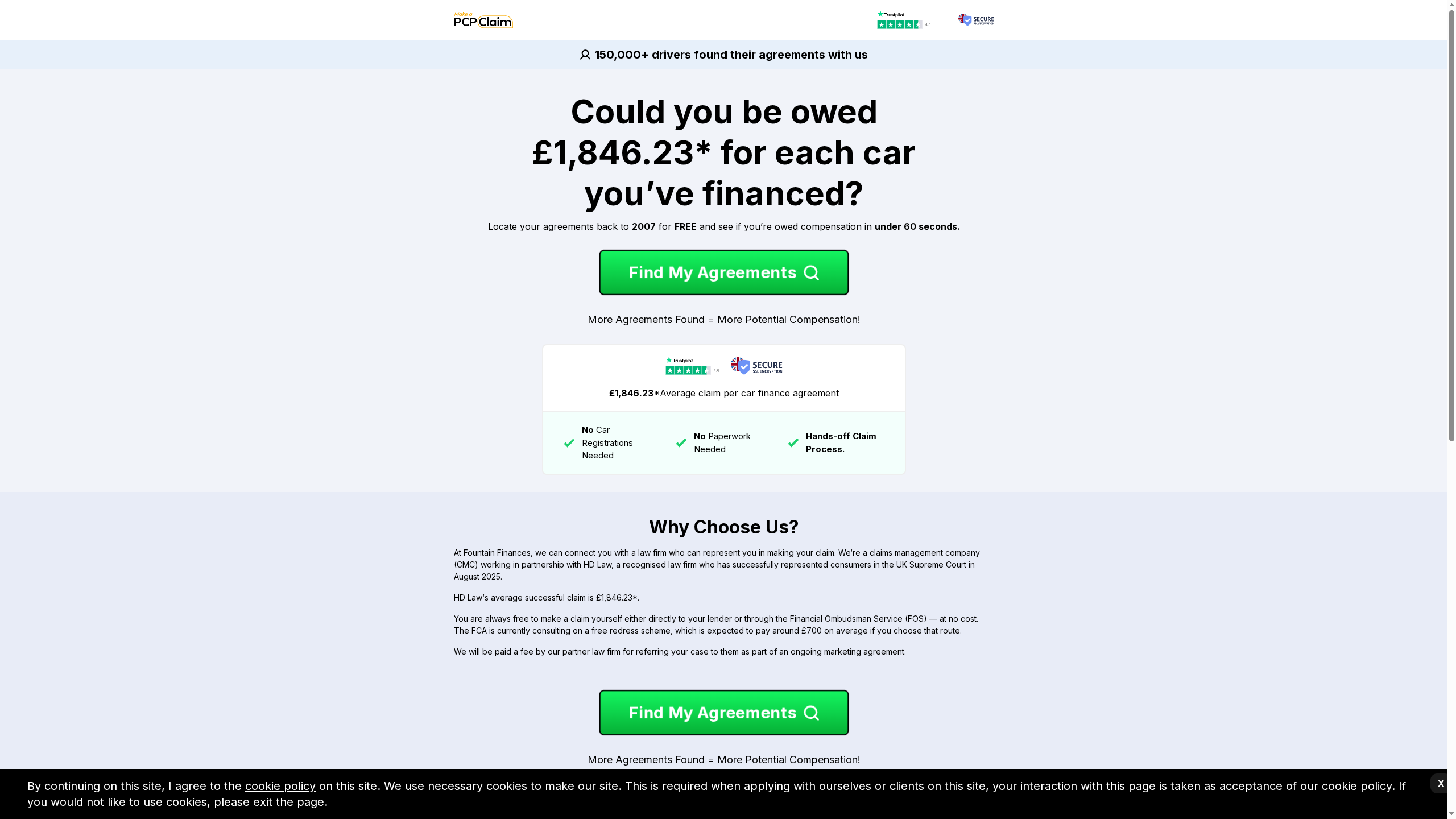
The platform also generates FCA-compliant complaint letters automatically, tracks your claim progress, and monitors key deadlines so nothing slips through. You get the structure of a professional claims process without the fees that eat into your compensation. If you are ready to check your eligibility and access the tools that make this process manageable, start your PCP claim today and see what you may be owed.
The core documents needed for finance claims are your original finance agreement, proof of identity and address at the time of the agreement, bank statements showing repayments, and any correspondence with the dealer or lender. Evidence of financial or emotional impact also strengthens your case.
Yes. Lenders are legally obliged to retain records for at least six years and must provide replacement documents on request. Bank statements and email correspondence can substitute for original paperwork in many cases.
Lenders must respond to complaints within eight weeks. If they do not respond, or if you reject their response, you can escalate to the Financial Ombudsman Service within six months of their final decision.
Significantly. The Ombudsman values structured evidence with a clear narrative. Well-organised claims are assessed faster and are more likely to be upheld than loosely assembled submissions.
Most claimants do not need to. Claims management companies typically charge 25 to 40% of your compensation, whereas the Financial Ombudsman Service is free. FCA-compliant templates and free online tools make self-managed claims very achievable.