490,000+ drivers found their agreements with us

TL;DR:
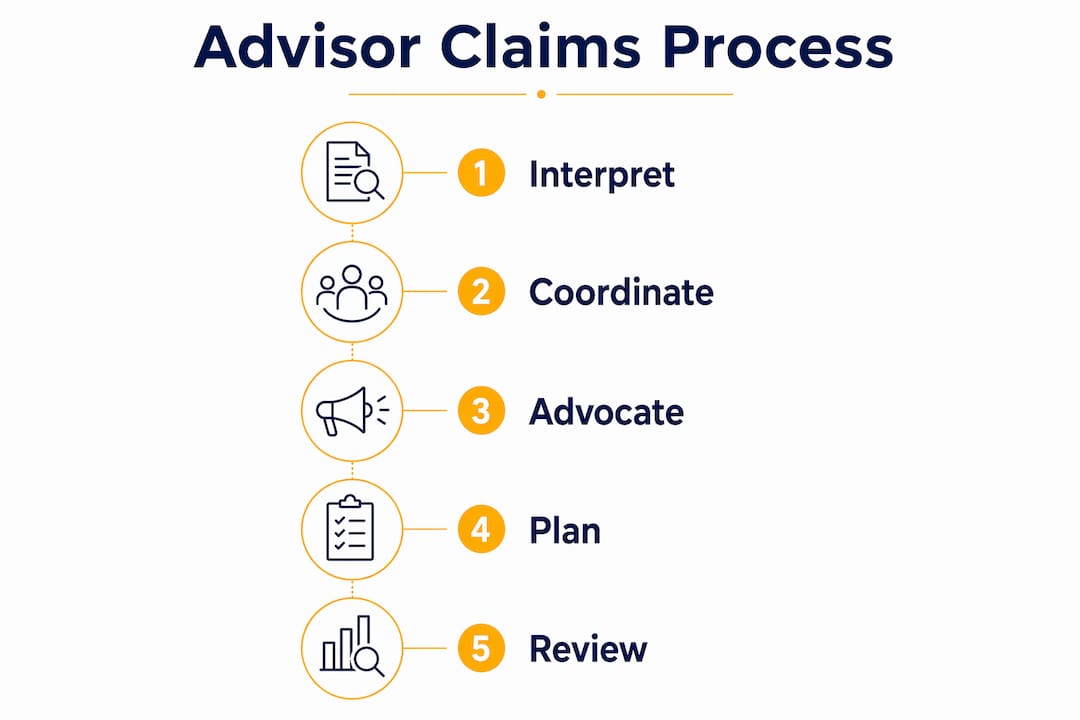
- Financial advisors interpret policy terms, coordinate documentation, and advocate for claimants to secure fair settlements. They also manage communication and long-term financial planning to protect claimants’ future needs.
Financial advisors play a defined role in the claims process: they interpret policy terms, coordinate with insurers, and advocate for claimants to secure fair settlements. For UK drivers over 30, the role of financial advisors in claims is particularly significant when dealing with car finance disputes, personal injury compensation, or complex insurance negotiations. Getting this support right from the start can be the difference between a delayed, undervalued settlement and one that genuinely reflects your loss.
Financial advisors interpret complex policy language and act as advocates to reduce the administrative and emotional burden on claimants. That means they do not simply hand you a document and walk away. They sit between you and the insurer, translating dense contractual terms into plain English and pushing back when a claim is undervalued or mishandled.
The practical scope of financial advisor responsibilities during a car claim is broader than most drivers realise. Advisors coordinate between insurers, medical providers, and legal teams to ensure documentation is accurate and submitted on time. Missing a deadline or submitting incomplete paperwork can delay or invalidate a claim entirely.
Core advisor responsibilities during the claims process include:
Pro Tip: Ask your advisor to provide a written timeline of key claim milestones at the outset. This keeps everyone accountable and prevents avoidable delays.
Consistent adherence to prescribed medical treatment also strengthens your claim. Failing to maintain treatment weakens case credibility in depositions and settlements. A good advisor will remind you of this and help you document your treatment history properly.
Advisors act as active advocates managing insurer communications, which relieves claimants from the administrative pressure that compounds stress after an accident. This role is especially valuable when you are coping with injury, vehicle loss, or financial uncertainty at the same time. Handing off the back-and-forth with insurers to a professional changes the experience significantly.

The disconnect between technical claim language and what claimants actually need to know is a persistent problem. Effective advisors translate advice into relatable language that addresses your real concerns rather than burying you in policy clauses. That shift in communication style builds trust and keeps the process moving.
Practical ways advisors reduce stress and improve outcomes include:
Pro Tip: When choosing a financial advisor for claims, ask specifically how they communicate with clients during the process. An advisor who sends weekly updates and explains decisions in plain English is worth more than one with impressive credentials but poor communication habits.
The importance of financial advisors is most visible when claimants are dealing with health challenges alongside their claim. Advisors’ advocacy during claims is often more valuable to clients than technical knowledge alone. Knowing someone is handling the paperwork while you recover is not a luxury. For many drivers, it is what makes the process manageable.
Not all financial advisors are equally suited to managing car claim settlements. The most important distinction is between commission-based advisors and fee-only advisors. Fee-only financial advisors charge flat or hourly fees and avoid the conflicts of interest that arise when an advisor earns commission on the products they recommend. This matters most when a lump sum settlement crosses into tax planning and long-term care territory.
| Advisor type | Fee structure | Best suited for | Key consideration |
|---|---|---|---|
| Fee-only advisor | Flat or hourly fee | Lump sum settlements, tax planning | No product commission; impartial advice |
| Commission-based advisor | Earns from products sold | General financial planning | Potential conflict of interest on settlements |
| Personal injury specialist | Varies | Complex injury claims, PPO decisions | Deep knowledge of compensation structures |
| Independent financial advisor | Fee or commission | Broad financial planning post-claim | Check FCA registration and claims experience |
Advisors with experience in personal injury or insurance claims bring specific knowledge that generalist advisors lack. They understand Periodical Payment Orders (PPOs), structured settlements, and the interaction between compensation and means-tested benefits. That expertise directly affects how well your financial plan holds up over time.
Choosing a financial advisor for claims also means checking their registration with the Financial Conduct Authority (FCA). The FCA regulates financial advisors in the UK and sets the standards they must meet. An unregistered advisor offering claims guidance has no regulatory accountability, which creates real risk for you.
For car finance claims specifically, understanding how to claim car finance compensation in the UK is a useful starting point before engaging an advisor. Knowing the basics of your own claim puts you in a stronger position when discussing strategy with a professional.
Settlement money requires careful management. Settlement timing aligned to personal tax years and care plans is often more important than the gross settlement amount. An advisor who understands this can structure the receipt of funds to reduce your tax liability and protect your eligibility for state support.
The choice between a lump sum and a Periodical Payment Order (PPO) is one of the most consequential decisions in a large settlement. Claimants often favour lump sums without appreciating the inflation protection and long-term security that PPOs provide. Advisors and expert witnesses guide clients through this decision by modelling life expectancy, care costs, and investment risk.
| Planning area | Key consideration | Advisor’s role |
|---|---|---|
| Tax timing | Settlement receipt relative to tax year | Structures payment to minimise liability |
| Lump sum vs PPO | Inflation risk, care costs, life expectancy | Models long-term scenarios objectively |
| Long-term care | Future care needs and cost inflation | Plans for escalating care expenses |
| Investment risk | Preserving settlement value over time | Recommends appropriate risk-adjusted strategy |
| Expert witness reports | Court or legal team requirements | Provides independent financial assessment |
Financial expert witnesses assess the long-term viability of compensation structures, providing courts and claimants with comprehensive reports that consider life expectancy, inflation, and investment risk. This is not a standard service from every advisor. Drivers pursuing larger settlements should confirm whether their advisor can provide or commission expert witness reports when required.
Financial planning for claims does not end when the settlement cheque arrives. A personalised financial plan, built around your health, lifestyle, and care needs, is what turns a settlement into lasting financial security. Advisors who specialise in post-settlement planning understand that a settlement fund is not simply a windfall. It is often a replacement for future income or care funding that must last decades.
Financial advisors in the claims process deliver their greatest value through advocacy, clear communication, and post-settlement planning, not just paperwork management.
| Point | Details |
|---|---|
| Advisor responsibilities | Advisors interpret policy terms, coordinate documentation, and manage insurer communications on your behalf. |
| Stress reduction | Handling insurer communications directly removes the administrative burden from claimants dealing with health or financial pressure. |
| Fee-only advisors | Fee-only advisors avoid commission conflicts, making them the most impartial choice for lump sum settlement planning. |
| Settlement timing | Aligning settlement receipt to your tax year can preserve more of your compensation than negotiating a higher gross figure. |
| PPO vs lump sum | Most claimants initially favour lump sums, but PPOs often provide better inflation protection and long-term security. |
Most drivers I speak with assume a financial advisor’s job is to fill in forms and chase insurers. That misunderstanding costs them. The real value of a good advisor shows up in the decisions you make after the settlement, not just during the claim itself.
I have seen drivers accept lump sum settlements that looked generous on paper, only to find the money eroded by inflation and unplanned care costs within a decade. An advisor who models those scenarios before you sign is worth considerably more than one who simply processes your claim efficiently.
The other thing drivers consistently undervalue is communication. Technical competence matters, but an advisor who cannot explain a PPO in plain English, or who leaves you waiting three weeks for an update, creates its own kind of stress. When choosing a financial advisor for claims, treat communication style as a non-negotiable criterion, not an afterthought.
My honest advice: engage an advisor before you receive a settlement offer, not after. The moment an offer lands on the table, your negotiating position shifts. An advisor involved from the start knows your full financial picture and can push back with evidence rather than guesswork.
— Jake
Makeapcpclaim helps UK drivers identify and pursue car finance claims quickly and without upfront cost. The platform finds your car finance agreements for free in under 60 seconds, giving you a clear starting point before you engage any professional support.

If you are unsure whether you have a valid car finance claim, Makeapcpclaim removes the uncertainty. The free agreement search takes less than a minute and gives you the information you need to take the next step with confidence. Visit Makeapcpclaim to check your agreements now and get the claim process moving without delay.
Financial advisors interpret policy terms, coordinate documentation, and advocate for claimants with insurers to secure fair settlements. Their role covers both the active claims process and long-term financial planning after a settlement is reached.
You are not legally required to use one, but an advisor reduces errors, manages deadlines, and often improves settlement outcomes. For complex claims involving injury or large compensation amounts, professional advice is strongly recommended.
Fee-only advisors charge a flat or hourly fee and have no financial incentive to recommend specific products. Commission-based advisors earn from the products they sell, which can create a conflict of interest when managing settlement funds.
A PPO is a court-approved settlement structure that pays compensation in regular instalments rather than a single lump sum. PPOs are index-linked, which means they adjust for inflation and provide more predictable long-term income than a lump sum invested independently.
Makeapcpclaim locates your car finance agreements for free in under 60 seconds. Use the class action case management process as a reference for understanding how group claims are handled, then visit Makeapcpclaim to check your own agreements without any upfront cost.